Sovereign AI
Data Sovereignty Requires Compute Sovereignty
Sovereign AI refers to artificial intelligence infrastructure (compute, data, model training, and deployment) that is owned, governed, and operated by or within the jurisdiction of a nation or regional economic community.
The Problem
Africa generates vast quantities of valuable data. SADC banking systems process billions of dollars in transactions annually. Satellite imaging captures agricultural, environmental, and urban data across the continent’s 30 million square kilometres. Mining operations generate geological data from some of the world’s richest mineral deposits. Health systems produce clinical records for over 1.4 billion people.
The overwhelming majority of this data is processed by infrastructure located in Northern Virginia, Dublin, and Singapore. The models trained on this data serve global markets. African institutions purchase access to insights derived from their own information. The World Bank’s Digital Economy for Africa Initiative estimated that Africa generates US$100 billion or more in annual data value; less than 2% of global AI compute is located on the continent.
As AI becomes central to national competitiveness in economic planning, security, healthcare, and industrial policy, this gap becomes strategically untenable.

The Solution
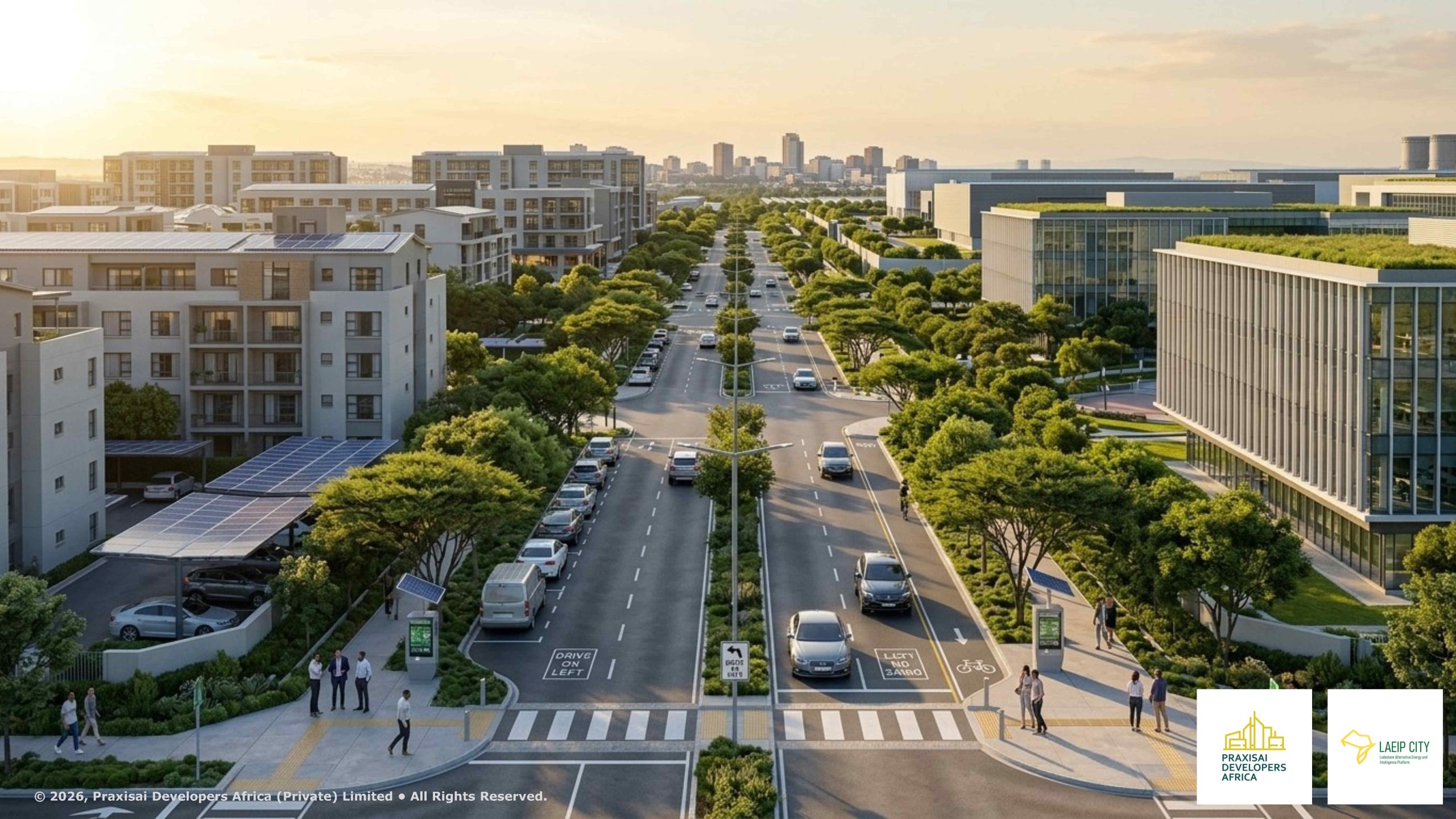
LAEIP City delivers sovereign AI infrastructure through four integrated components.
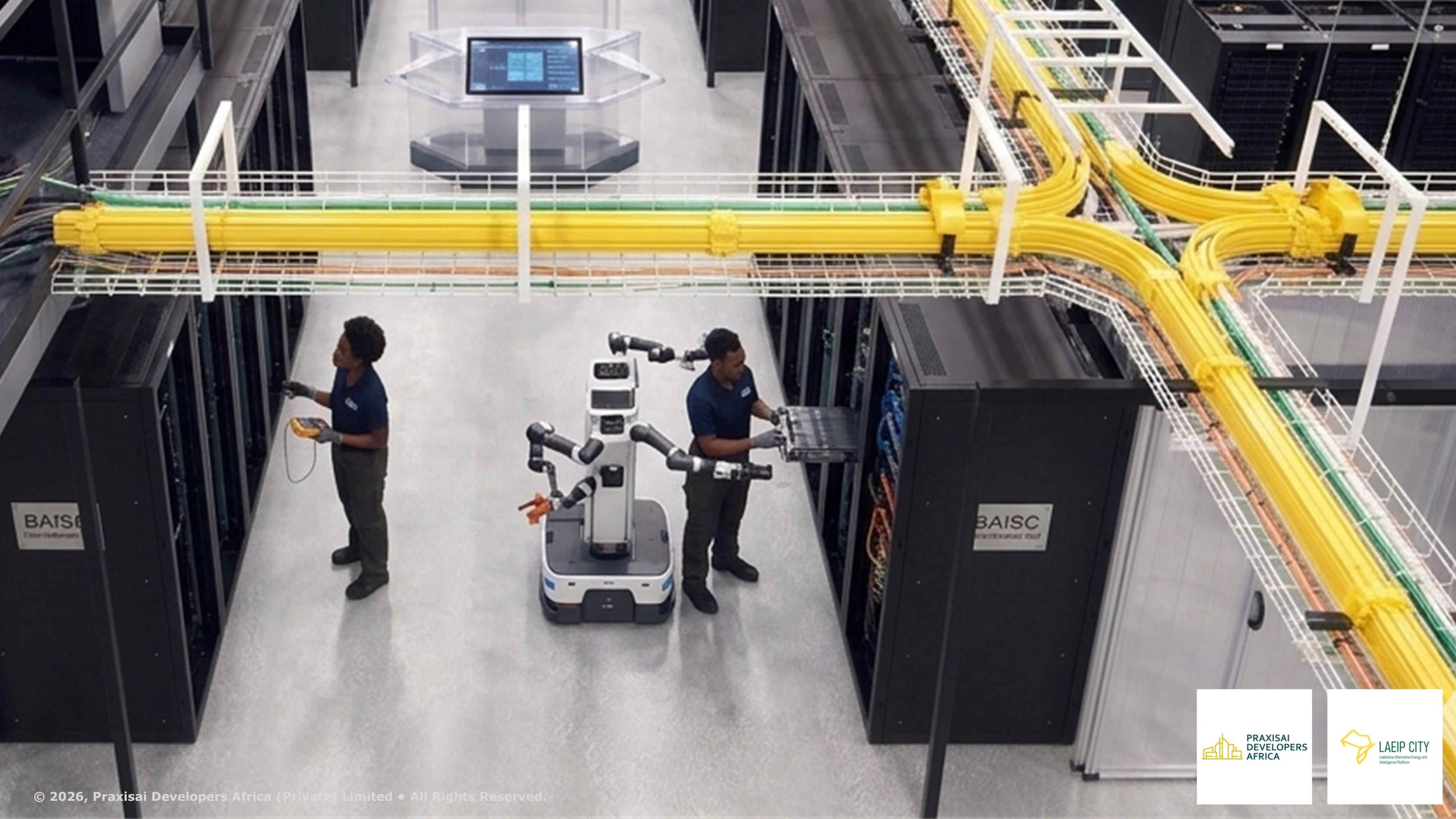
- AISC. The planned 100MW Bulawayo Sovereign AI Supercomputing Centre (BSAISC) shall provide compute capacity sufficient for national AI services, regional model training, and commercial cloud tenancy thereby processing workloads that currently leave the continent.
- Research. The planned African AI Research Institute (AARI) at Discovery Tower generates African-led, African-context AI research through models trained on African languages, agricultural data, health records, and financial systems.
- Energy. The planned 300MW solar PV along with 400MWh BESS and hydrogen production ensure energy independence alongside data sovereignty.
- Governance. Our governance model ensures regional, institutional, and political alignment through active participation in Regional Economic Communities (RECs). Sovereign AI infrastructure has to be governed sovereignly.
The Sovereignty LogicAL Framework
IF
we build sovereign AI infrastructure powered by renewable energy,
AND
we prioritise skills development and inclusive access,
THEN
African nations can leapfrog extractive development models,
THEREFORE
capturing economic value from our own data whilst demonstrating positive technological advancement for the region.
Government AI Applications
1
National identity verification and management.
1
National identity verification and management.
Secure, scalable digital identity programmes serving populations of hundreds of millions and facilitating cross-border travel.
2
Tax administration and revenue optimisation.
2
Tax administration and revenue optimisation.
AI-driven compliance monitoring and forecasting for national revenue authorities across SADC and COMESA.
3
Urban planning and infrastructure modelling.
3
Urban planning and infrastructure modelling.
AI integrated with satellite data for real-time urban system management, transport planning, and infrastructure investment.
4
Climate change forecasting and agricultural planning.
4
Climate change forecasting and agricultural planning.
Hyperlocal climate models for government planning agencies, enabling precision responses to drought, flood, and seasonal variation.
5
Healthcare resource
allocation.
5
Healthcare resource allocation.
AI-driven capacity planning and diagnostic support for national health systems across vast geographies.
Why Bulawayo?
- Global Horizontal Irradiance (GHI) of 1,900–2,100 kWh/m² annually delivers the energy density required for large-scale renewable generation.
- A skilled industrial workforce inherited from Bulawayo’s decades as Zimbabwe’s manufacturing capital provides the technical labour base.
- Zimbabwe’s dual membership of both SADC and COMESA creates a unique jurisdictional position serving 37 member states and approximately 980 million people.
- The ZIDA Special Economic Zone framework offers regulatory and fiscal incentives for strategic infrastructure.
- Compute demand across SADC and COMESA is growing almost faster than anywhere else on the planet, with almost little domestic supply.